
The Arthur Morgan Effect
Why don't RPGs tug at my heartstrings?

Recently I finished the main story of the video game Red Dead Redemption 2 (RDR2). The game came out in 2018 and I'm 7 years late to the party but it's left me thinking an awful lot, as I'm sure it has done a lot of other people. Those thoughts bleed over into other realms, like tabletop RPGs, and I thought I'd explore them a little.
Consider this fair warning that there will be spoilers about the game's story below. Yes, the game is nearly ten years old, but I’m warning about spoilers all the same because if you haven’t yet played it you absolutely should.
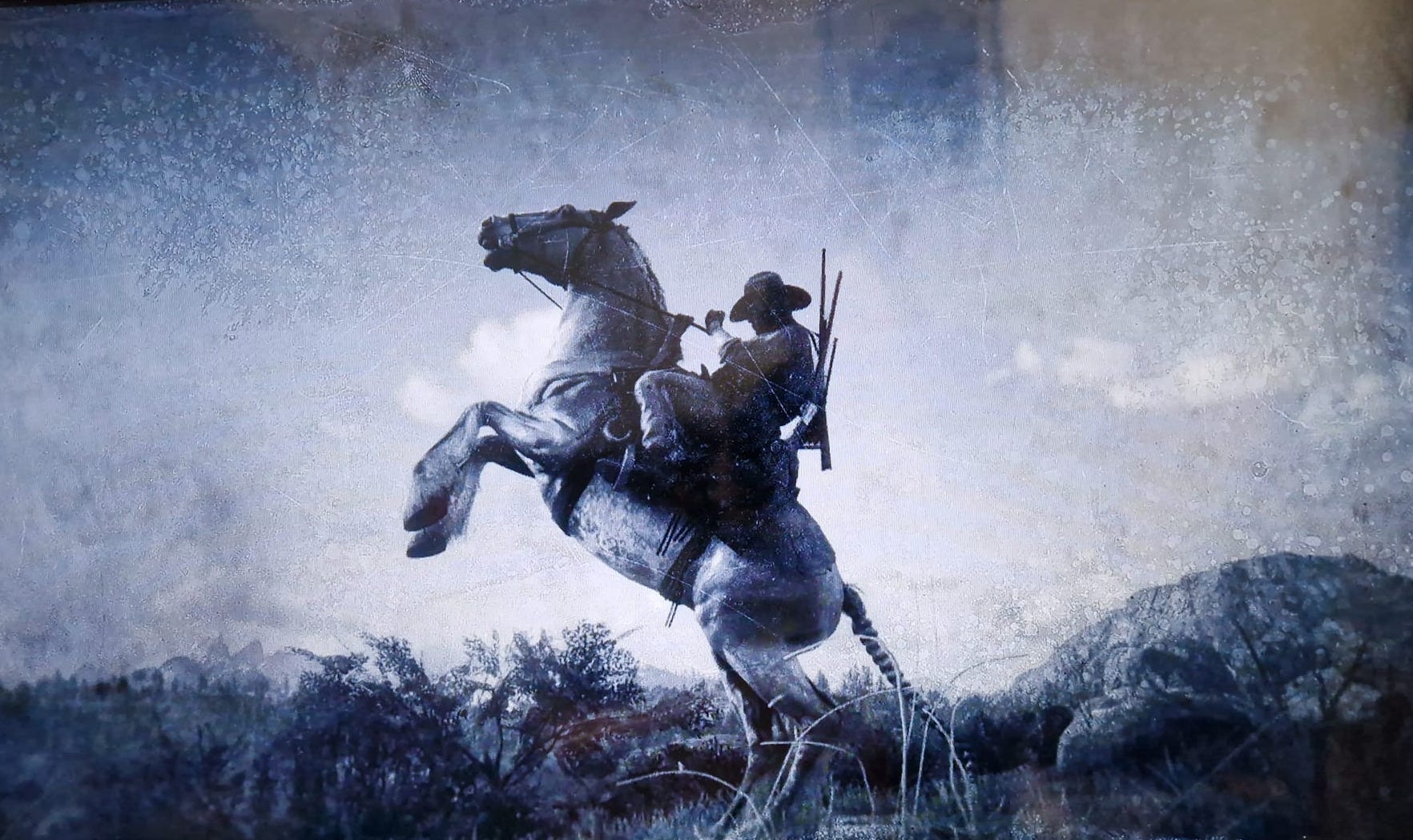
There are a number of themes in RDR2. The unstoppable march of 'civilisation' trampling all other ways of life underfoot is a major one that turns up in a number of ways, the main way being through the gang of outlaws your character, Arthur Morgan, is a part of. Arthur is the hardman of the gang, acting on behalf of loan sharks, providing the muscle on robberies, and is generally interested only in acting either in his self-interest or for the good of the gang. You rob banks and trains, but from the very start of the game it's clear the days of the outlaw are numbered, and for the gang the question isn't how to get rich, it's how to get out.
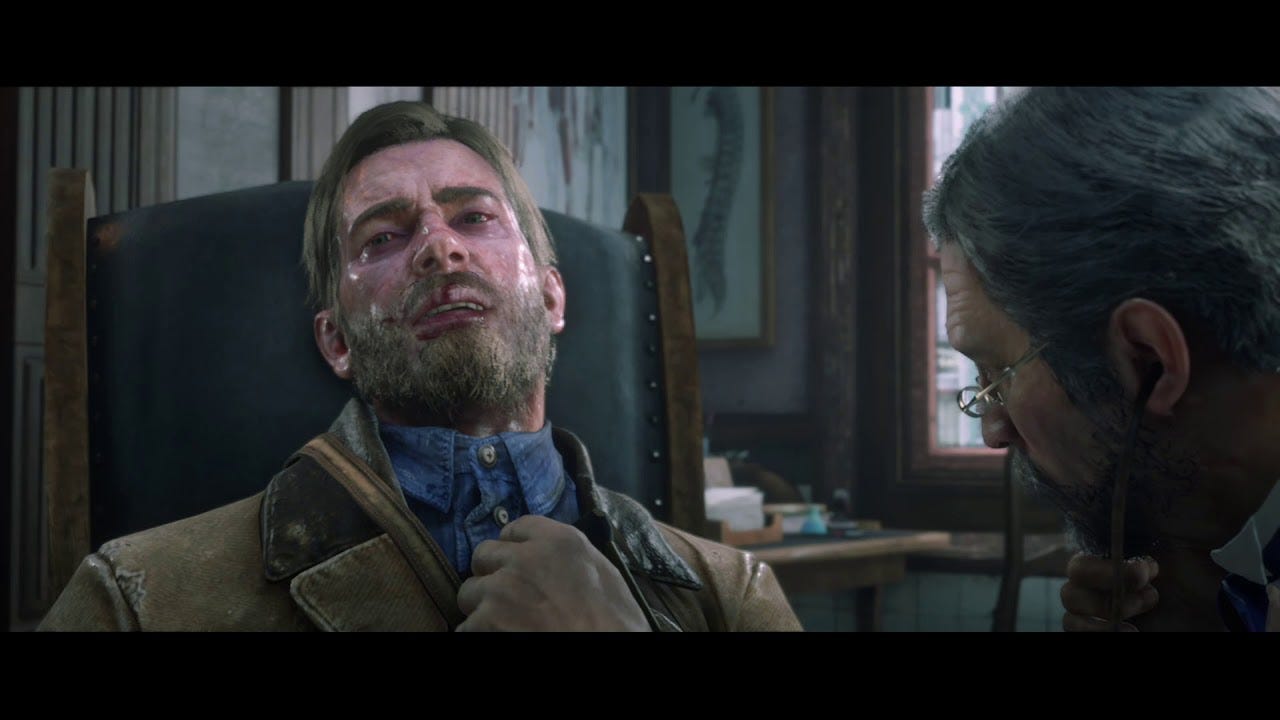
Pretty boilerplate gaming up to now (albeit incredibly well done), but then the twist kicks in. Arthur collapses in the street, coughing uncontrollably. A stranger helps him get to a doctor, who diagnoses Arthur there and then: he has tuberculosis, a death sentence in a pre-antibiotic world. Suddenly facing his mortality, most likely imminently, Arthur tries to redeem himself and save those around him while the wider world causes his gang and way of life to collapse in on itself.
I feel as though I'm in a fugue state writing about this. For a game about cowboys, gunfights and riding horses, the story of Arthur's search for redemption in life is unquestionably the most emotional experience I've had playing a video game. The more desperate things get, the more his illness causes him harm, the harder Arthur tries to make amends and protect those he loves. The final journey with Arthur riding to camp to confront those he's been loyal to for decades, struggling to stay upright from the effects of TB, was the first time I've shed a tear playing a game. I read a comment online somewhere along the lines of 'I've never mourned a fictional character before Arthur' and I get it. There’s a space in my day-to-day that Arthur has left vacant.
Sat here, steeping in this quasi-grief, I had to ask myself: why have I never felt this way playing a tabletop RPG before? Especially when I don’t really play video games any more, but player RPGs regularly.
It would take a lot of effort to figure out how many RPG characters I've made through the years, and how many campaigns they've turned up in. Suffice to say there's been a fair few, and of course there's also the games I've ran as a GM and the NPCs I’ve created for those. There are characters I’ve liked, characters I'm still attached to now, but if I'm honest with myself I don't think I've felt as strongly about a character I've made as I did about Arthur.
Is this a question of rulesets and systems? It's difficult to determine, but ultimately most RPG rules are designed so that you can tell a story with them. Those stories are often the most impactful thing they can do, but it's seldom the only thing they do. We want that little endorphin boost we get from doing something successfully in a RPG. We roll our dice, say the number we got, and we get that kick of satisfaction when it's successful. Often the best stories from our games is when those dice rolls go wrong and we create 'ludonarrative' - the point where gameplay and narrative combine. It's a powerful tool, but it's not one that lends itself to a story like Arthur facing down his mortality. Ludonarrative at the tabletop leaves too much to chance to create a reliable theme, and in embracing the chaos that comes with this you give up a degree of melodrama, but the same goes for a video game - it's no coincidence that the most powerful scenes in RDR2 are cutscenes, or points in gameplay where you give up control of Arthur while they play out.
If emotional scenes in video games take control away from the player we need to reconsider railroading in our games. It's a term that's taboo - players don't want to be passive observers in their games as though they're watching a film. The word I see time and again when reading about RPGs is ‘agency’, and making sure, as a GM, the players feel that they are in a world that they have a say in and can influence directly. That agency has limits though, typically dictated by the amount of work the GM is going to have to do to make things come back together. If you're using something like a pre-written campaign your story has been picked for you already: is that truly agency? We accept the limitations on agency implicitly because without them the game simply wouldn't work, all it would take is one player wanting to sew chaos to completely derail everything the GM has prepared and bring the game to a halt.
This implicit agreement is what separates RPGs from other types of games. Referring to a RPG as 'cooperative storytelling' is a little out of favour these days but it does sum up this idea well: we've come together as a group of players and a GM to have a good time, and that requires us all to work together to achieve this. Failing to stick to the implicit agreement will likely explain why a lot of RPG campaigns fall apart, either gradually or spectacularly. This failure to cooperate from a GM's side is often heavy-handed railroading, where players are passive; an example of a failure from a player might be 'main character syndrome' where they treat everyone else as nothing more than NPCs, rather than equals. We all have to share being the supporting cast and the star of the scene in equal measure.
A story with an emotional tie goes beyond this agreement though and asks for more from the players. To really take part in an emotional storyline and let it 'get to you' the way RDR2 did to me requires us to be vulnerable. Playing a video game on your own, or something similarly solitary like reading a book, is a space where we can be vulnerable with little fear of backlash. We control when we do it, where we do it, and if anyone else is around we can pick and choose whether to continue or not if we're afraid of being judged. A tabletop RPG requires everyone around the table to agree to be vulnerable, sometimes with people we might not know that well. The role-playing part of role-playing games can be awkward, uncomfortable, and feel downright ridiculous, so it's no wonder we often revert to being silly in our games to break that tension. It's a useful tool, protecting from excessive ‘bleed’ and keeps everyone having fun, but it's the opposite of vulnerability - it's us putting our guards back up, saying 'this isn't the time for you to get invested in what your character is doing, keep it light'. That's perfectly fine, I should add, but I think it goes some way to explaining why we don't get emotionally sucker-punched in RPGs the way other media can strike you.
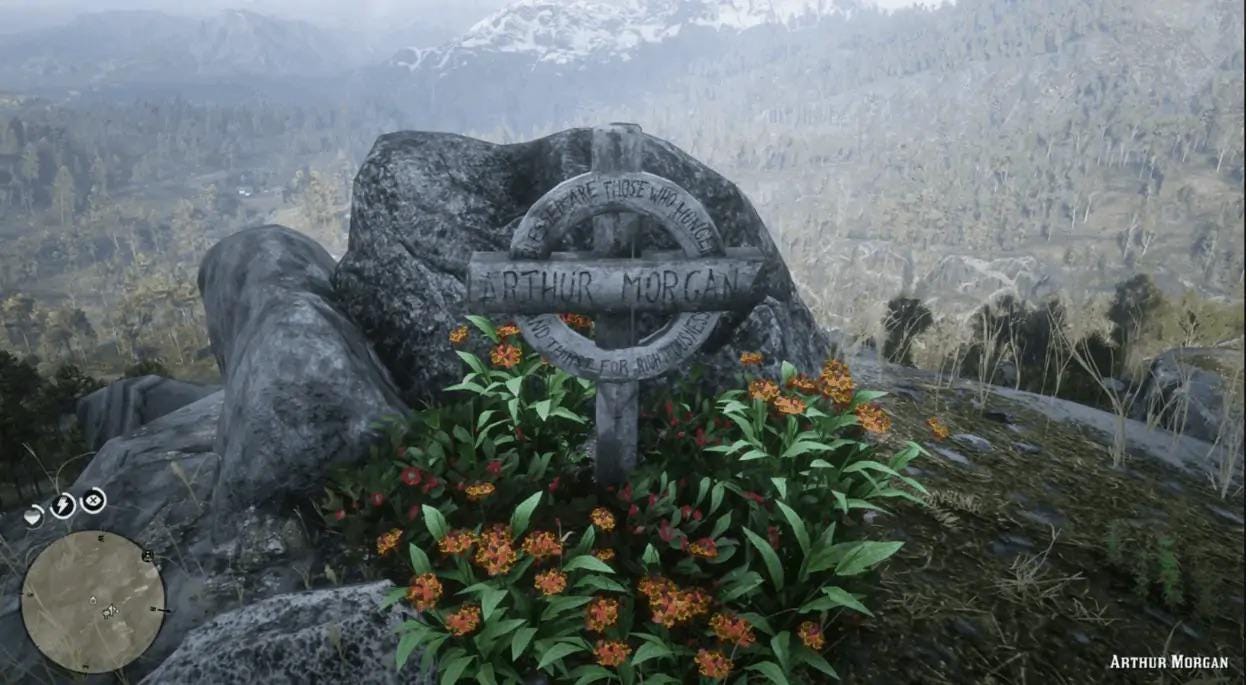
Where do we go from here then? Many of us love the characters we have built and the stories that develop around them, we're often attached to them in a significant way. I still think back fondly to my first 5E character on returning to RPGs ten years ago: Darmok the dwarf, who consistently managed to murder monsters that were meant to be able to kill him easily. Even now I could tell you what Darmok would do if he were in my current game, and thinking abstractly about a character goes some way to developing that emotional connection. Ultimately, it's something we have to do individually, treating it as a bonus if it happens at the tabletop. When viewed this way the scope for emotions happens 'in the gaps' rather than in the open, but is just as valid and powerful. Something I've started doing in my current campaign in relation to this is letter writing: having my PC write letters home to his parents in-between sessions, when I think he'd naturally pause to do this (usually when we end a session on a rest.) They've not been shared with the other players - they've not even been printed - but they're there in the background, slowly building up the picture of what this character is like beyond moving minis and rolling dice. It's been an enjoyable exercise that has added colour to the sessions as this character's image builds and builds. I've not made any plans to incorporate them into the campaign, but maybe if something were to happen to my character another player could find them, and they might just have a moment like I did when I said goodbye to Arthur Morgan.
I'm really curious as to what RPGs the author has played. I find that you don't get this emotional pull in games like D&D because the mechanics of the game do not particularly care about the characters emotional state. But I have felt this emotional pull, heavily, in a game like Masks, which is all about growing up and finding yourself and staying true to your identity - and has mechanics that reflect that.